

A plain silicone tube performs well at atmospheric pressure, but deforms as soon as internal pressure rises — it bulges, pulls off the fitting — or collapses under vacuum. The failure mode is not catastrophic rupture; it is a progressive loss of dimensional stability and, consequently, of functional performance.
The solution is a structural reinforcement embedded within the tube wall. The standard architecture is a multilayer construction with a mesh layer encapsulated between inner and outer silicone layers. Vulcanisation over the mesh creates an intimate mechanical bond between the elastomer and the reinforcement. This article examines the three principal mesh types — polyester, aramid and stainless steel — their performance envelopes and selection criteria.
Multilayer construction: why encapsulation matters
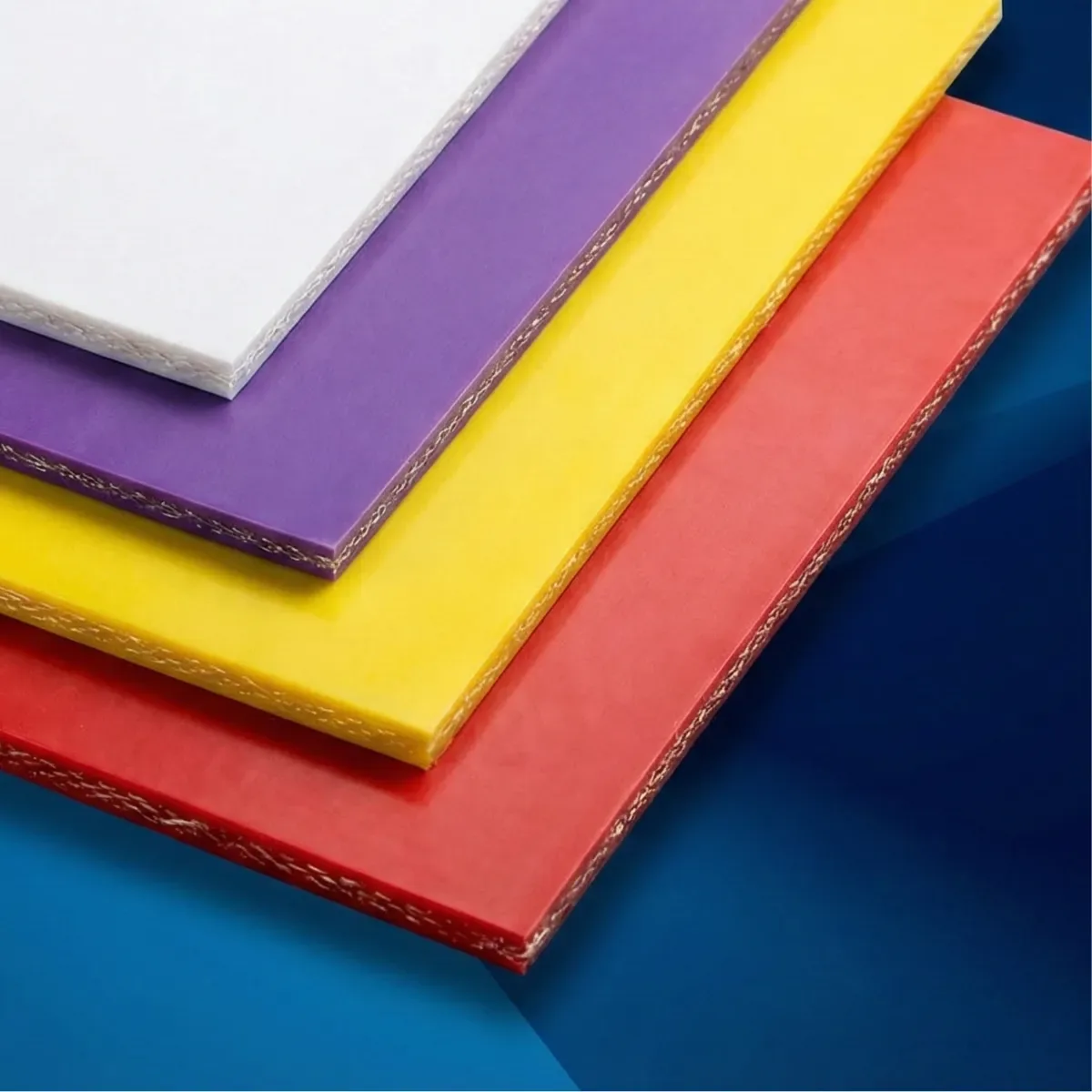
The key lies in how the reinforcement integrates into the wall. The inner silicone layer is extruded onto a mandrel under controlled air pressure. The mesh — braided or spiral-wound — is applied over the partially vulcanised inner layer. An outer silicone layer then encapsulates the mesh entirely. Full vulcanisation takes place in a continuous oven, bonding all three layers into a single structure.
A critical parameter is the synchronisation between extrusion speed and braiding or winding speed. This ratio determines the braid angle relative to the tube axis and governs how load is distributed between internal pressure resistance and axial tension resistance. An incorrect angle produces a tube that withstands pressure adequately but elongates excessively under tension, or vice versa.
The second critical point is silicone-to-mesh adhesion. During vulcanisation, the silicone penetrates and bonds into the yarn weave, creating a monolithic structure. Poor adhesion — caused by insufficient vulcanisation temperature, untreated mesh surfaces or formulation incompatibility — allows the layers to separate under pressure and temperature cycling. The result is an intramural bubble that propagates progressively until failure.
For peroxide-cured formulations, a static oven post-cure completes the crosslinking process and removes volatile by-products. For platinum-catalysed systems, post-cure is optional and depends on the extractables requirements of the intended application.
Three reinforcement types: polyester, aramid and stainless steel
Polyester mesh
The most widely used reinforcement. It provides a balanced combination of pressure resistance, tensile strength and crush resistance without excessive stiffening of the tube. Its mechanical properties are maintained up to +180 °C continuous service. Polyester mesh is the reference choice for pressurised process lines, cooling circuits, pump connections, laboratory hoses and partial vacuum applications.
Aramid mesh
Specified when the service temperature exceeds the polyester limit. Aramid fibre (Kevlar® / Nomex® type) maintains its mechanical properties up to +270 °C continuous service and offers an exceptional strength-to-weight ratio. It is paired with VMQ HT (high-temperature) silicone formulations. Typical applications include high-temperature pressurised circuits, autoclaves and pressurised steam lines.
Stainless steel mesh
Reserved for the highest pressures, full vacuum service and the most demanding environments. AISI 304 or 316L mesh or spiral construction. Stainless steel undergoes no mechanical degradation within silicone's useful temperature range and provides superior crush and pressure resistance compared with any textile reinforcement. It is the only option for maximum pressure combined with maximum temperature (VMQ HT up to +300 °C) and is mandatory for large diameters exceeding 50 mm. The choice between 304 and 316L is determined by the external chemical environment.
Quick comparison
| Reinforcement | Max. continuous temp. | Pressure resistance | Flexibility | Weight | Relative cost |
|---|---|---|---|---|---|
| Polyester | +180 °C | Moderate | High | Low | Low |
| Aramid | +270 °C | Medium-high | Medium | Very low | Medium-high |
| Stainless 304 / 316L | +300 °C (with VMQ HT) | Very high | Low-medium | High | High |
Do you actually need reinforced tubing?
Over-specification is the first thing to avoid. A thick-walled plain tube may well suffice for low or intermittent pressures. The key question is whether any of the following conditions apply: working pressure exceeding 1–2 bar, partial or full vacuum, axial tension on the tube, crush resistance required, or the need to maintain a circular cross-section under all circumstances.
Selection matrix by application
The decision between polyester, aramid and stainless steel reinforcement is based on three parameters: service pressure, working temperature and applicable regulatory requirements.
| Service condition | Reinforcement | Inner layer | Typical applications |
|---|---|---|---|
| Moderate pressure, T ≤ 180 °C, industrial | Polyester | Standard peroxide VMQ | Industrial lines, machinery connections, compressed air, process water |
| Moderate pressure, food-grade FDA / EC | Polyester | Platinum food-grade VMQ | Beverage lines, CIP under pressure, food pump connections |
| Moderate pressure, medical / pharma USP VI | Polyester | Platinum biocompatible VMQ | Bioreactors, pharmaceutical process lines, medical devices |
| Medium-high pressure, T up to +270 °C | Aramid | VMQ HT | Hot machinery, autoclaves, pressurised steam lines |
| High pressure or full vacuum, industrial | Stainless 304 / 316L | Peroxide or platinum VMQ | High-pressure lines, pressurised vessels, full vacuum |
| Maximum temperature (+300 °C) under pressure | Stainless 304 / 316L | VMQ HT | Hot process lines under pressure, ovens |
| Large diameter pressurised (> 50 mm) | Stainless / aramid | VMQ per application | Large-format equipment, pressurised ducts, vacuum sleeves |
Dimensional ranges by application
Standard configurations cover inner diameters from 4 to 100 mm. Maximum working pressure decreases with diameter — the pressure surface grows quadratically whilst reinforcement resistance grows only linearly. Four ranges are distinguished, each with differentiated applications.
| ID range | Wall thickness | Typical reinforcements | Presentation | Applications |
|---|---|---|---|---|
| 4 – 12 mm | 2 – 4 mm | Polyester, aramid | Coils 10–25 m | Laboratory under pressure, instrumentation, small pumps, pneumatic lines |
| 12 – 25 mm | 3 – 6 mm | Polyester, aramid, stainless | Coils 10 m or cut lengths | Machinery connections, pressurised process, cooling, pump transfer |
| 25 – 50 mm | 4 – 8 mm | Polyester, aramid, stainless | Cut to length | Pressurised transfer, industrial vacuum, process equipment, pressurised discharge |
| 50 – 100 mm | 5 – 12 mm | Stainless (standard), aramid | Cut to length | Large-format equipment, pressurised ducts, vacuum sleeves, autoclaves |
All dimensions manufactured to ISO 3302-1 E1/E2 tolerances; lengths cut to L2 tolerance.
Food-grade, pharmaceutical and medical applications
Multilayer construction with embedded mesh is particularly favourable for hygienic applications: the inner layer is smooth, compact silicone with no reinforcement at the contact surface. Contact certifications depend exclusively on the inner layer formulation.
Food contact: FDA 21 CFR 177.2600, EC 1935/2004, BfR IX/XV — requires a platinum-cured food-grade inner layer. Pharmaceutical and medical: USP Class VI, ISO 10993 — requires a platinum-cured biocompatible inner layer. In both cases, polyester reinforcement is standard; aramid is specified for thermal applications such as SIP with pressurised steam.
The smooth outer silicone layer is CIP-compatible, permits visual inspection and presents no contamination crevices. This is why embedded mesh has replaced visible external braid in critical food, beverage and pharmaceutical applications.
When not to specify reinforced tubing
It is worth insisting on this point: over-specification is the most frequent source of unjustified additional cost. A reinforced tube is not universally superior. For gravity transfer, standard peristaltic pumping, light laboratory aspiration and atmospheric-pressure service, a plain tube is technically superior — more flexible, smaller bend radius, significantly lower cost, simpler ear-clamp connection.
Specification for technical tender documents
Minimum specification data: exact inner diameter with tolerance, maximum continuous and peak working pressure, test pressure if applicable, service vacuum level, minimum and maximum working temperature, transported fluid, applicable standard (FDA, EC 1935/2004, USP Class VI, ISO 10993, BfR), connection type and required length. For CIP/SIP cycles: temperature, detergent concentration and estimated frequency.
Need custom reinforced silicone tubing?
Tell us the diameter, working pressure, temperature and applicable standard. Quotation within 24–48 hours.
Request a quote →